
On this page
- Introduction
- The Rise of AI Search for Local Businesses
- Why AI Search Works Differently Than Traditional Local SEO
- The 3 Signals That Influence AI Recommendations
- Signal #1: Strong Entity Authority Across the Web
- Signal #2: Reviews and Sentiment Signals
- Signal #3: Mentions on Trusted Authority Sites
- How AI Chooses Between Competing Businesses
- Business A
- Business B
- Why Some Businesses Never Appear in AI Answers
- How to Check Your AI Visibility
- The Future of Local SEO in the Age of AI
- Conclusion
- FAQ: AI Visibility and Local SEO
- Can AI tools like ChatGPT recommend local businesses?
- Why doesn’t my business appear in AI search results?
- Does Google Business Profile affect AI visibility?
- How can I improve my AI visibility?
AI search is quickly becoming a new discovery channel for local businesses. But unlike traditional search engines, AI tools do not rank websites. They recommend businesses.
Introduction
For more than two decades, local SEO has revolved around one goal: ranking in search results.
Businesses optimized their websites, built backlinks, and improved Google Business Profiles to climb the rankings for queries like:
- best dentist in Raleigh
- HVAC repair near me
- plumber in Chicago
But AI search tools such as ChatGPT, Google AI Overviews, Perplexity, and Gemini are changing how these queries are answered.
Instead of showing a list of websites, AI systems increasingly respond with recommended businesses.
For example, when a user asks:
- Who are the best dentists in Raleigh?
AI tools may return a short list of businesses along with brief explanations and citations.
This shift raises an important question for local businesses and agencies:
How does AI decide which businesses to recommend?
While the algorithms are not fully public, patterns across AI answers reveal three signals that strongly influence recommendations.
The Rise of AI Search for Local Businesses
AI assistants are rapidly becoming a new way people discover services.
Instead of opening Google and browsing through multiple websites, users can simply ask:
- "Best HVAC company in Dallas"
- "Affordable family dentist near me"
- "Top rated roofing contractors in Tampa"
AI tools synthesize information from across the web and return direct recommendations.
This is a major shift in the local search landscape.

Traditional search results usually look like this:
- A list of websites
- Ads
- Maps listings
- Directories
AI answers look more like this:
Here are a few well-reviewed dentists in Raleigh:
- Smile Dental Raleigh
- Midtown Family Dentistry
- Bright Smiles Dental Group
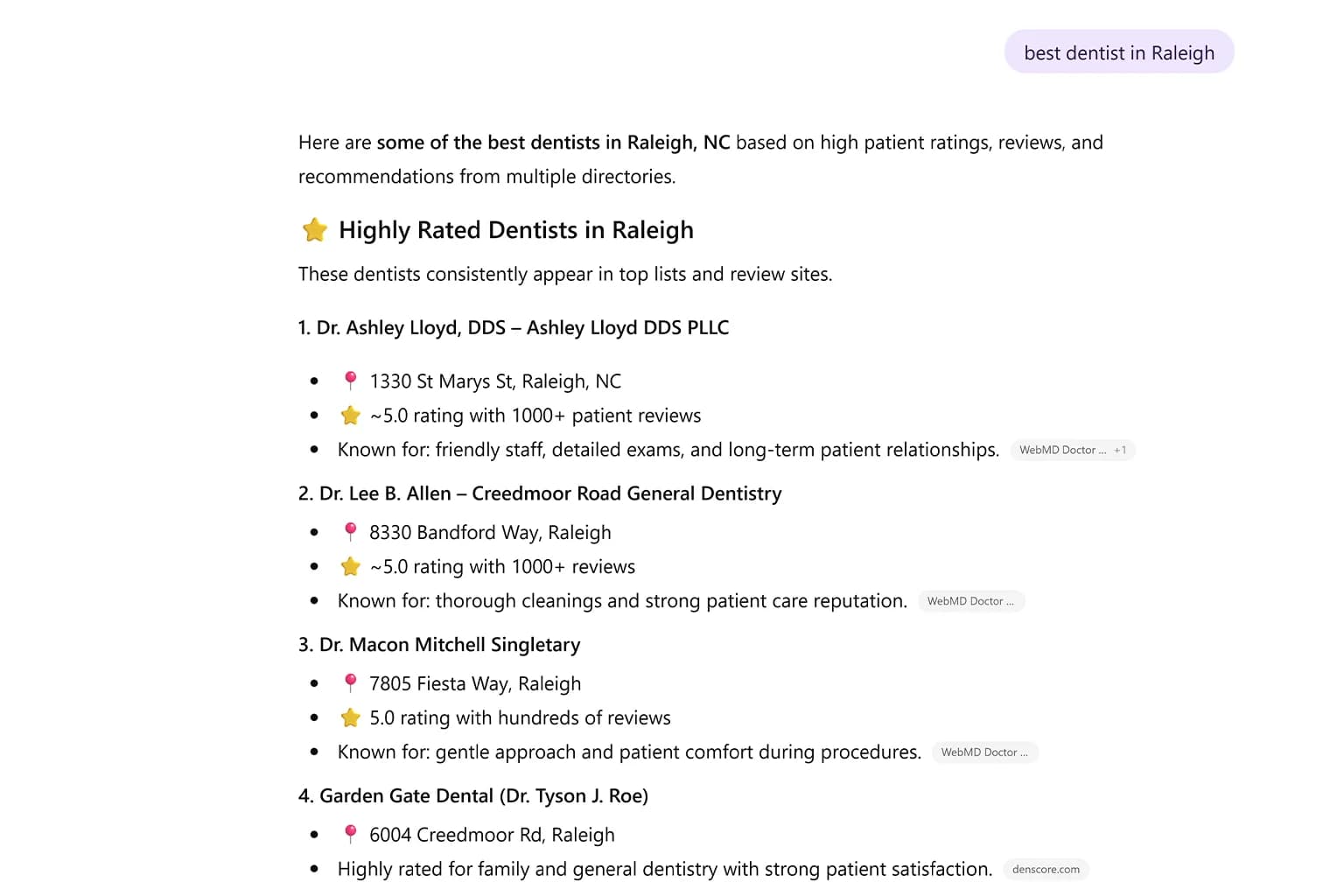
Instead of competing only for rankings, businesses now compete for AI recommendations.
Why AI Search Works Differently Than Traditional Local SEO
Traditional local SEO focuses on ranking signals such as:
- Website optimization
- Backlinks
- Keyword targeting
- Technical SEO
These factors influence which webpages appear in search results.
AI search works differently.
Instead of ranking webpages, AI models attempt to identify credible businesses that can confidently answer the user’s query.
To do this, they rely on signals that help them understand:
- Which businesses exist
- Which businesses are trusted
- Which businesses are frequently mentioned
This is why businesses that rank well in Google do not always appear in AI answers, and vice versa.
AI recommendations are often based on entity signals, not just website rankings.
Across many AI responses, three signals appear repeatedly.
The 3 Signals That Influence AI Recommendations
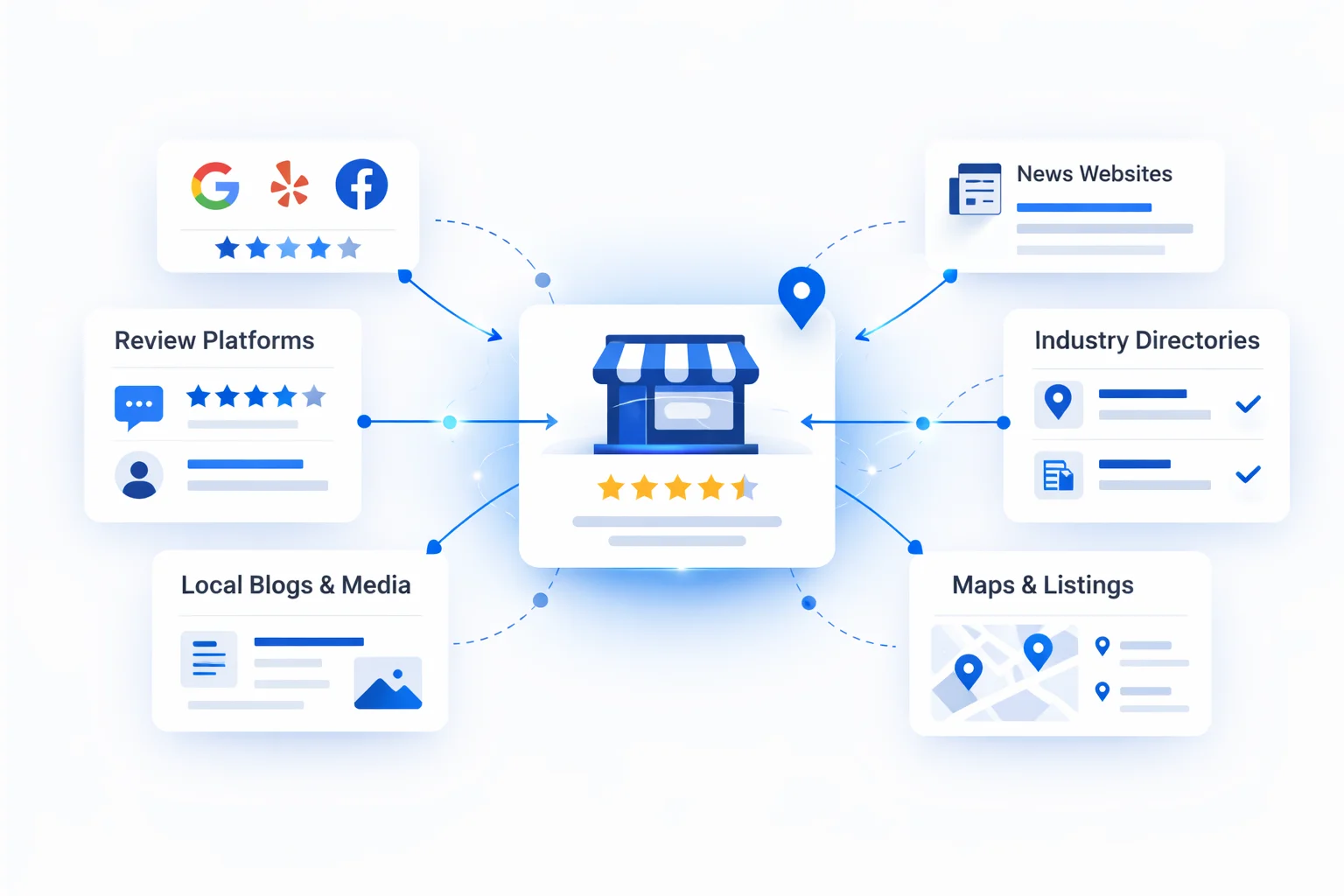
When AI systems recommend local businesses, they tend to rely on three broad signals:
- Entity authority
- Review signals
- Mentions across trusted sources
These signals help AI models determine whether they can confidently recommend a business.
Let’s explore each one.
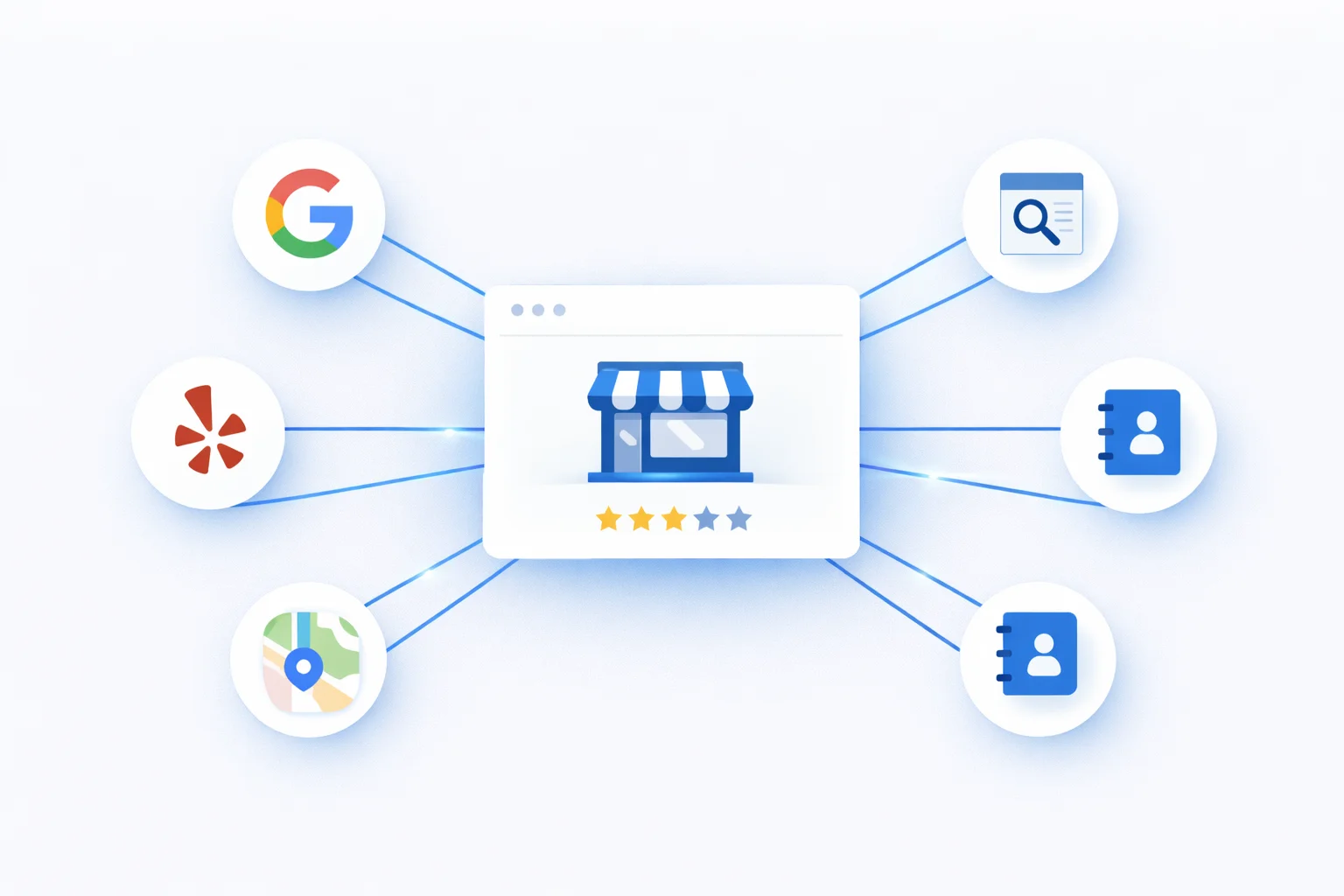
Signal #1: Strong Entity Authority Across the Web
AI systems need to understand that a business clearly exists as a consistent entity.
That usually means the business appears across multiple platforms with matching information.
Examples include:
- Google Business Profile
- Yelp
- Apple Business Connect
- Bing Places
- Industry directories
- Local citation sites
Across these platforms, AI looks for consistency in key business details such as:
- Business name
- Address
- Phone number
- Website
- Category
When those signals are consistent across the web, AI systems can more confidently recognize a business as a legitimate entity.
Inconsistent information can create confusion.
For example:
- Bright Smile Dental
- Bright Smiles Dentistry
- Bright Smile Dental Raleigh
If these variations appear across different directories, the AI system may treat them as separate businesses.
Clear and consistent entity signals make it easier for AI tools to understand and recommend a business.
Signal #2: Reviews and Sentiment Signals
Reviews play an increasingly important role in AI search.
AI models analyze not only the number of reviews but also the content of those reviews.
For example, reviews might mention:
- "great emergency plumber"
- "fast AC repair"
- "best Invisalign dentist"
- "friendly pediatric dentist"
These phrases help AI systems understand what services a business is known for.
That makes it easier for AI tools to match businesses to specific queries.
For example, a user might search for:
- best emergency plumber in Denver
AI systems may favor businesses whose reviews frequently mention:
- Emergency service
- Same-day repairs
- Fast response
In this way, reviews act as a powerful source of real-world service descriptions.
Businesses with the following are often more likely to appear in AI recommendations:
- Higher review volume
- Strong ratings
- Detailed service mentions
Signal #3: Mentions on Trusted Authority Sites
Another strong signal comes from mentions across trusted platforms.
AI models frequently rely on information from well-known sources such as:
- Yelp
- Angi
- Healthgrades
- BBB
- TripAdvisor
- Industry directories
- Local news sites
- Blog roundups
- "Best of" lists
When multiple trusted sources reference the same business, AI models gain confidence that the business is credible.
For example:
- Yelp Top Rated Dentist
- Raleigh Magazine Best Dentists
- Healthgrades listing
- BBB Accredited
These signals reinforce the business’s reputation across the web.
AI systems tend to prefer businesses that appear in multiple trusted sources because the information is easier to verify.
How AI Chooses Between Competing Businesses
To understand how these signals interact, imagine a user asks:
- best HVAC company in Raleigh
AI systems may compare businesses like this:
Business A
- 350 Google reviews
- Yelp listing
- Angi listing
- Featured in a local blog roundup
Business B
- 25 Google reviews
- Minimal directory presence
- Few external mentions
Even if both businesses provide similar services, AI is far more likely to recommend Business A.
The reason is simple: Business A has stronger confirmation signals across the web.
Why Some Businesses Never Appear in AI Answers
Many businesses that perform well in traditional SEO still struggle to appear in AI answers.
Common reasons include:
- Inconsistent business information
- Limited citation coverage
- Low review volume
- Few mentions on trusted platforms
- Weak online presence beyond their website
Even excellent businesses may be invisible to AI systems if their online signals are weak or fragmented.
How to Check Your AI Visibility
Because AI answers change frequently, it can be difficult to understand how your business appears across AI platforms.
One practical approach is to test prompts such as:
- best dentist in [city]
- top HVAC company near me
- plumber in [city]
Then track whether your business appears in responses.
If you want a faster way to benchmark those prompts, try Rankley’s AI visibility tool.
The Rankley AI Visibility Tool helps businesses quickly see:
- How ChatGPT describes their business
- Whether they appear for industry searches
- How competitors appear in AI responses
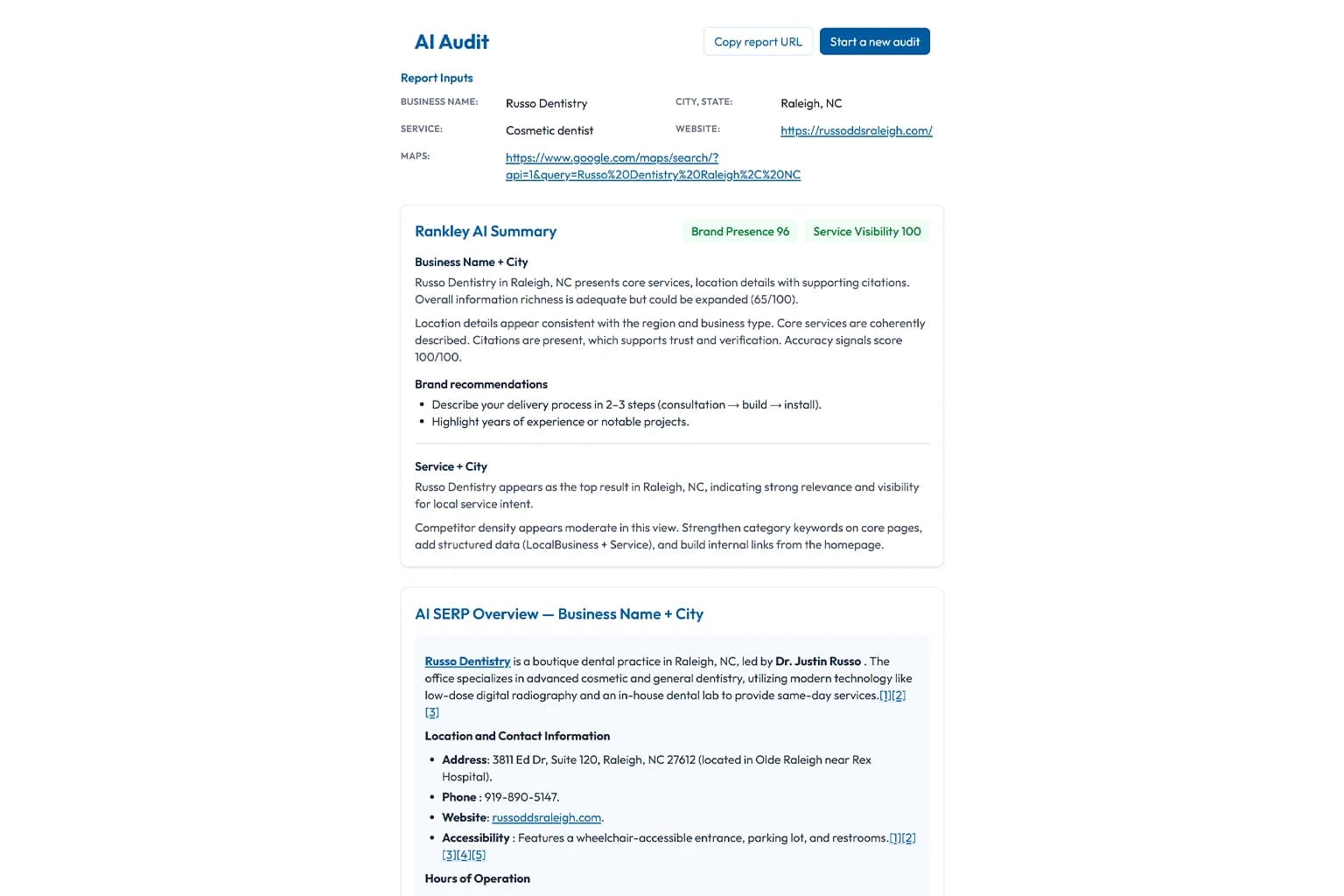
Running periodic checks can help identify opportunities to strengthen AI signals.
The Future of Local SEO in the Age of AI
Local SEO is evolving.
Traditional strategies focused on:
- Rankings
- Keywords
- Backlinks
AI search places greater emphasis on:
- Entity authority
- Reviews and sentiment
- Trusted mentions
Businesses that strengthen these signals are more likely to appear in AI recommendations.
For agencies and local businesses, that means expanding beyond traditional SEO tactics and focusing on a more complete digital presence.
Conclusion
AI search is reshaping how customers discover local services.
Instead of simply ranking webpages, AI tools now recommend businesses they can confidently verify.
Across many AI responses, three signals consistently influence those recommendations:
- Strong entity authority across the web
- Reviews with clear sentiment and service descriptions
- Mentions across trusted sources
Businesses that strengthen these signals improve their chances of appearing in AI-generated answers.
As AI search continues to evolve, understanding these signals will become an essential part of modern local SEO.
FAQ: AI Visibility and Local SEO
Can AI tools like ChatGPT recommend local businesses?
Yes. AI assistants increasingly provide recommendations for services such as dentists, plumbers, and contractors based on information gathered across the web.
Why doesn’t my business appear in AI search results?
This can happen if your business has weak entity signals, limited reviews, inconsistent citations, or few mentions across trusted sources.
Does Google Business Profile affect AI visibility?
Yes. Google Business Profile remains a key entity signal and often provides foundational data used across many search platforms.
How can I improve my AI visibility?
Focus on strengthening entity consistency, building review volume, and earning mentions on trusted directories and industry sites.

Published by Rankley Editorial
The Rankley team shares practical guides, tools, and insights to help local businesses get found online.