On this page
- Google AI Summaries (AI Overviews): Where the Data Comes From
- 1) Google’s Index (Your Website)
- 2) Google Business Profile (GBP)
- 3) Schema Markup (Structured Data)
- 4) Third-Party Sources
- ChatGPT Business Information: How It’s Gathered
- 1) Training Data
- 2) Live Browsing and Integrations
- 3) Business Databases and APIs
- Key Differences: Google AI Summaries vs ChatGPT
- How to Optimize for Google AI Summaries and ChatGPT Business Info
- 1) Keep Your Google Business Profile Updated
- 2) Use Schema Markup on Your Site
- 3) Make Information Unmissable on Your Website
- 4) Manage Listings and Citations
- 5) Monitor Reviews and Reputation
- 6) Ongoing Monitoring of AI Results
- Why This Matters for AI-Driven Local Search
- Final Thoughts
- Free Resource
AI is changing how customers find businesses online. This guide explains how Google AI Summaries (AI Overviews) and ChatGPT pull your business information and how to optimize what they show.
Artificial Intelligence is reshaping discovery. Instead of only listing links, Google and AI assistants now generate summaries of business information directly in search results. That means potential customers might learn about your brand before they ever click.
Understanding how Google AI collects business data and how ChatGPT business information is compiled is key to showing up accurately in AI-driven local search.
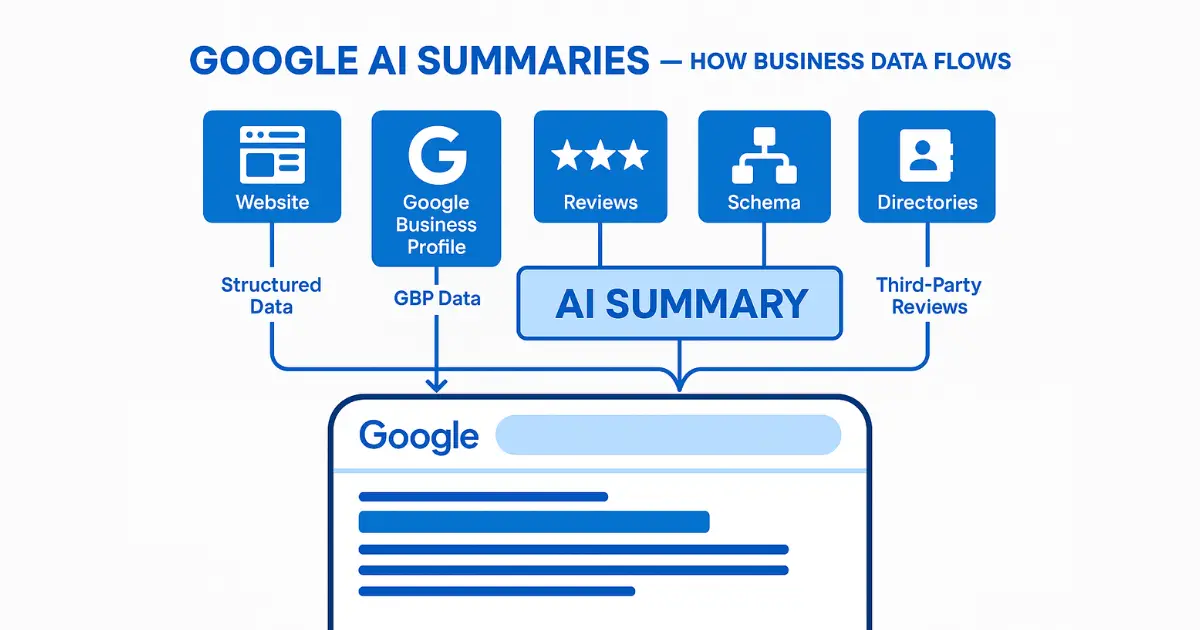
Google AI Summaries (AI Overviews): Where the Data Comes From
When you see an AI-generated snapshot at the top of a Google results page, that’s an AI Overview commonly referred to as Google AI Summaries. These summaries are built from Google’s index, trusted sources, and structured data.
1) Google’s Index (Your Website)
Googlebot crawls your site and looks for signals such as:
- Services you offer and products you sell
- Location details and areas served
- Business hours and contact information
- Clear, descriptive page content written in natural language
A site that’s well-structured and task-focused is easier for AI Overviews to summarize. For broader visibility, keep your site aligned with solid local SEO best practices.
2) Google Business Profile (GBP)
Your Google Business Profile is often the single most trusted source for local business data. Google AI Overviews frequently pull:
- Hours (including holidays) and contact details
- Photos and attributes (e.g., “wheelchair accessible”)
- Customer reviews and ratings
If your GBP isn’t actively managed, you’re leaving the quality of Google AI Summaries to chance.
3) Schema Markup (Structured Data)
Schema markup is code that makes your content machine-readable, helping Google understand exactly what your business does.
LocalBusinessschema for name, address, phone, and hoursFAQPageschema for common questions and answersProduct/Serviceschema where applicable
Adding schema is like handing AI a cheat sheet.
4) Third-Party Sources
Google supplements your site and GBP with data from trusted directories and vertical platforms (Yelp, TripAdvisor, Trustpilot, industry associations, and licensing directories). In hospitality, food, and travel, these sources especially reviews can heavily influence Google AI search results.
ChatGPT Business Information: How It’s Gathered
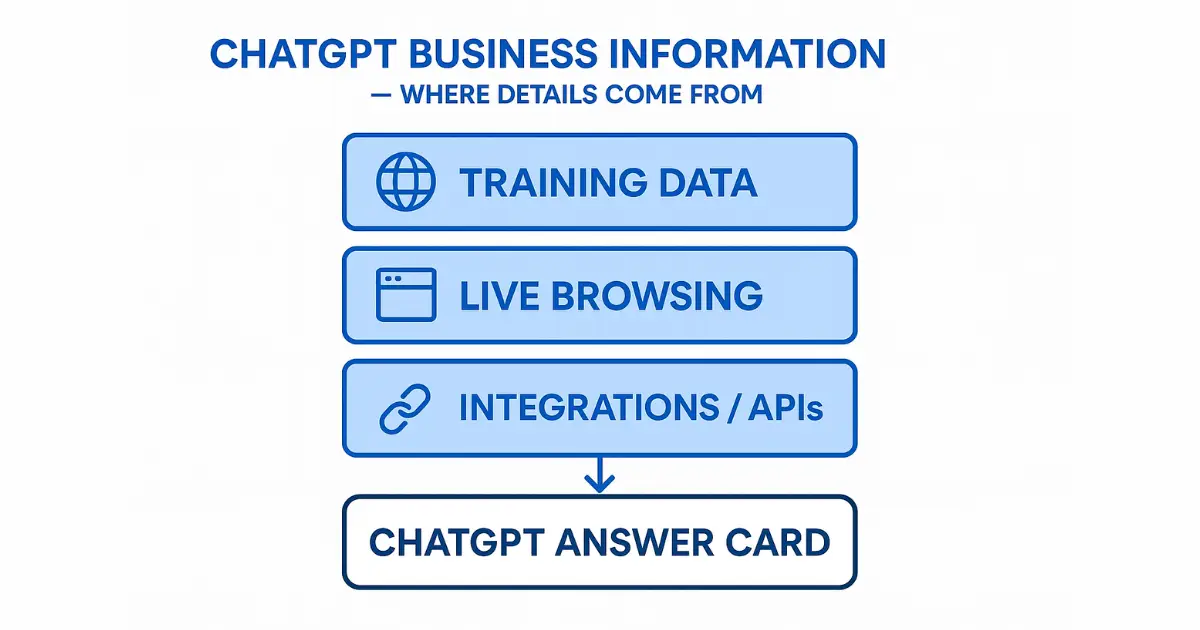
ChatGPT (and tools like Bing Copilot or Perplexity) work a bit differently from Google. Optimizing for ChatGPT business information means making details both human-friendly and machine-parsable.
1) Training Data
ChatGPT’s core knowledge comes from large public datasets (websites, directories, and general business information) available up to the model’s training cutoff. Newer businesses may need live browsing or integrations to appear.
2) Live Browsing and Integrations
Some versions or partner products can browse the web in real time. That allows ChatGPT to:
- Pull details from your website
- Reference Google Maps or Yelp listings
- Cite recent news or announcements
Example: “The restaurant is open until 10 PM tonight, according to its website and Google Maps.”
3) Business Databases and APIs
AI assistants can connect with structured data providers (e.g., Yelp, OpenTable, TripAdvisor). If you’re listed there and your information is consistent, it’s more likely to surface in ChatGPT answers.
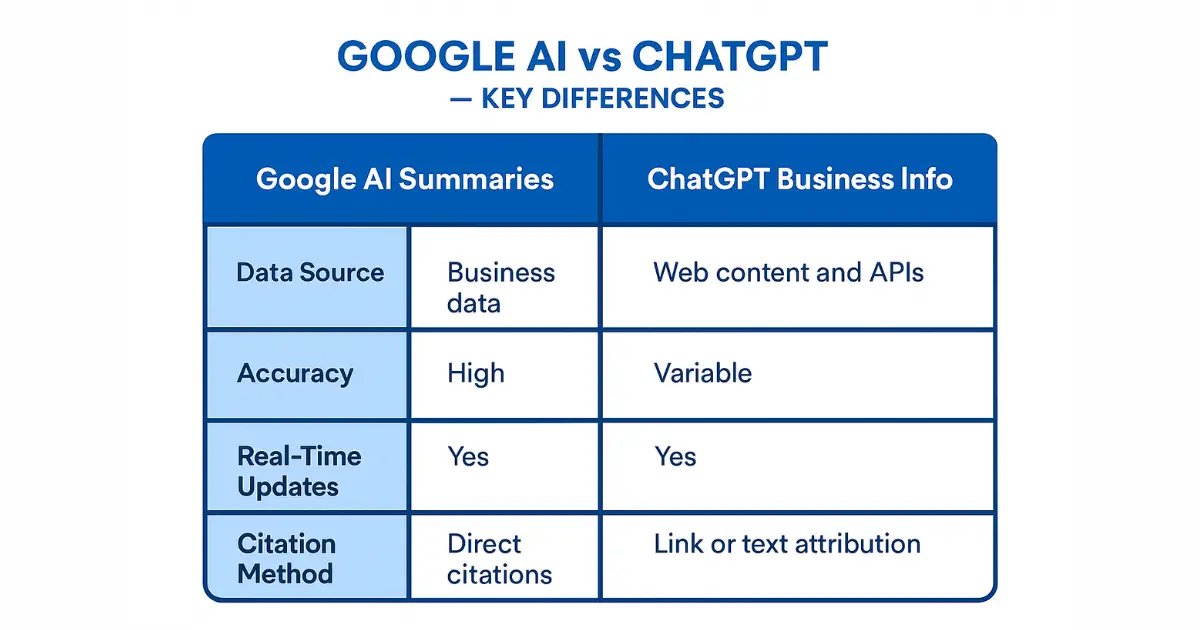
Key Differences: Google AI Summaries vs ChatGPT
- Google AI Overviews: Pull primarily from your website, Google Business Profile, schema, and trusted directories, which can provide great real-time accuracy when your GBP and site are current.
- ChatGPT: Uses a mix of training data, live browsing, and integrations. This is great for conversational, multi-step answers when your information is consistent across sources.
How to Optimize for Google AI Summaries and ChatGPT Business Info
Use this practical checklist to optimize for Google AI Summaries and improve how ChatGPT cites your details. Turn it into an internal SOP and keep it updated each quarter.
1) Keep Your Google Business Profile Updated
- Claim and verify your GBP
- Maintain accurate hours (including holidays)
- Add services, products, and high-quality photos
- Respond to reviews (all of them)
- Use the most relevant categories and attributes
2) Use Schema Markup on Your Site
- Implement
LocalBusinessschema with NAP and hours - Add
FAQPageschema for common pre-purchase questions - Use
ProductorServiceschema where applicable - Validate with Google’s Rich Results Test
3) Make Information Unmissable on Your Website
- Show NAP (Name, Address, Phone) in the header/footer
- Publish a clear Contact page with an embedded map
- Create robust, separate service pages
- Publish FAQs and helpful posts that answer customer questions in natural language
- Cover service areas and location terms naturally
4) Manage Listings and Citations
- Claim profiles on Yelp, Facebook, TripAdvisor, and key industry directories
- Ensure NAP consistency everywhere (exact matches)
- Fix duplicates and remove outdated listings
- Keep categories and tagging consistent across platforms
5) Monitor Reviews and Reputation
- Ask happy customers for reviews (ethically, per platform rules)
- Reply to negative feedback with empathy and specifics
- Track ratings across Google, Yelp, and vertical sites
- Highlight testimonials on your website
6) Ongoing Monitoring of AI Results
- Periodically search your brand in Google and review Google AI Summaries for accuracy
- Ask ChatGPT what it “knows” about your business and check for gaps
- Update GBP, website content, and schema quarterly
- Track changes after major Google or platform updates
Why This Matters for AI-Driven Local Search
AI experiences are designed to save users time, which means more answers appear directly on the SERP or inside a chat. You may see fewer immediate clicks, but strong Google AI Summaries and accurate ChatGPT business information still drive calls, visits, and bookings.
Businesses that optimize early gain a durable advantage as these features expand.
Final Thoughts
Google AI Summaries and ChatGPT aren’t replacing your website. They’re interpreting it. Keep your GBP accurate, use schema markup, maintain consistent listings, and cultivate reviews. Do that, and AI tools will present your business in the best possible light, making it easier for customers to find and trust you in AI-driven search.
Free Resource
Duplicate our AI Search Optimization Checklist in Notion to operationalize everything in this post and keep your team aligned: https://rankley.notion.site/ai-search-optimization-checklist-for-businesses

Published by Rankley Editorial
The Rankley team shares practical guides, tools, and insights to help local businesses get found online.