On this page
- Why Local Search Is Changing Faster Than SEO Can Keep Up
- What AI Local SEO Really Means in 2026
- How AI Discovers Local Businesses
- The AI Local Visibility Stack (2026 Model)
- The Core Layers AI Evaluates
- Why Rankings Alone Will Stop Working
- Maps Visibility vs AI Visibility
- Maps Visibility
- AI Visibility
- The Biggest Risks for Local Businesses
- What Happens When Business Data Conflicts
- How to Prepare for AI Local SEO Before 2026
- 1) Treat Your Business as an Entity (Not Just a Website)
- 2) Eliminate Data Conflicts Everywhere
- 3) Optimize for Clarity (Not Keywords)
- 4) Strengthen Real-World Trust Signals
- 5) Monitor AI Visibility (Not Just Rankings)
- Preparing for AI Local SEO
- The Future of Local SEO Is Visibility Management
- About Rankley
- Related Reading on AI & Local SEO
Local search is entering its biggest shift since Google Maps changed how customers found nearby businesses.
By 2026, local discovery won’t be driven only by keywords, rankings, or even traditional map results. Instead, AI-powered search experiences will increasingly decide which businesses get recommended and which get ignored.
This shift aligns with Google’s public direction toward AI-assisted search and answer generation, including AI Overviews and conversational search experiences
(see Google’s guidance on how Search works:
https://developers.google.com/search/docs/fundamentals/how-search-works).
Search isn’t disappearing. It’s becoming decision-driven.
This guide breaks down what AI Local SEO really means in 2026, how AI chooses which local businesses to surface, and what you can do now to stay visible.
If you want to see how these signals come together in a real report, review our Demo AI Visibility Audit.
TL;DR: Traditional local SEO is about position. AI Local SEO is about certainty. Your goal shifts from ranking everywhere to being trusted enough to be chosen.
Why Local Search Is Changing Faster Than SEO Can Keep Up
For years, local SEO followed a predictable pattern:
- Search a service + location
- Compare map results
- Choose from a short list
AI is rewriting that behavior.
Consumer research already shows users prefer direct answers over exploration, especially for high-intent local decisions
(Pew Research Center, search behavior studies:
https://www.pewresearch.org/internet/).
Today, users increasingly ask:
- “Who’s the best near me?”
- “Which business should I trust?”
- “Where should I book right now?”
AI assistants don’t return ten blue links (or even three map listings). They return answers.
By 2026, the default experience will not be browsing. It will be being guided, a trend reinforced by Google’s Search Generative Experience and AI Overviews rollout https://blog.google/products/search/generative-ai-search/.
What AI Local SEO Really Means in 2026
AI Local SEO is not a new checklist or ranking factor.
It’s the practice of making your business clearly understood, consistently represented, and confidently recommended by AI systems.
AI doesn’t think in pages or keywords. It thinks in entities a concept Google has openly discussed for years
https://developers.google.com/search/docs/appearance/structured-data/intro-structured-data.
An entity is a real-world business defined by:
- Name and location
- Services and categories
- Reputation and reviews
- Mentions across the web
- Historical accuracy and trust
Google’s Knowledge Graph and entity-based understanding power this model
https://blog.google/products/search/introducing-knowledge-graph-things-not/.
AI systems don’t ask “Which page is optimized best?”
They ask “Which business can I confidently recommend?”
That difference changes everything.
How AI Discovers Local Businesses
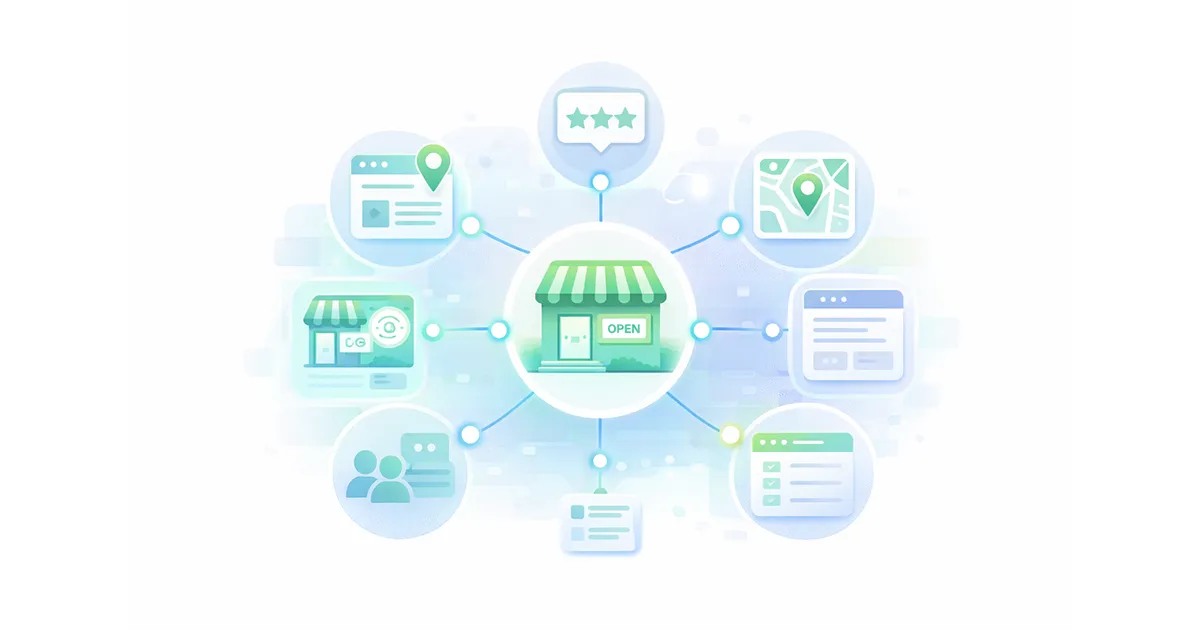
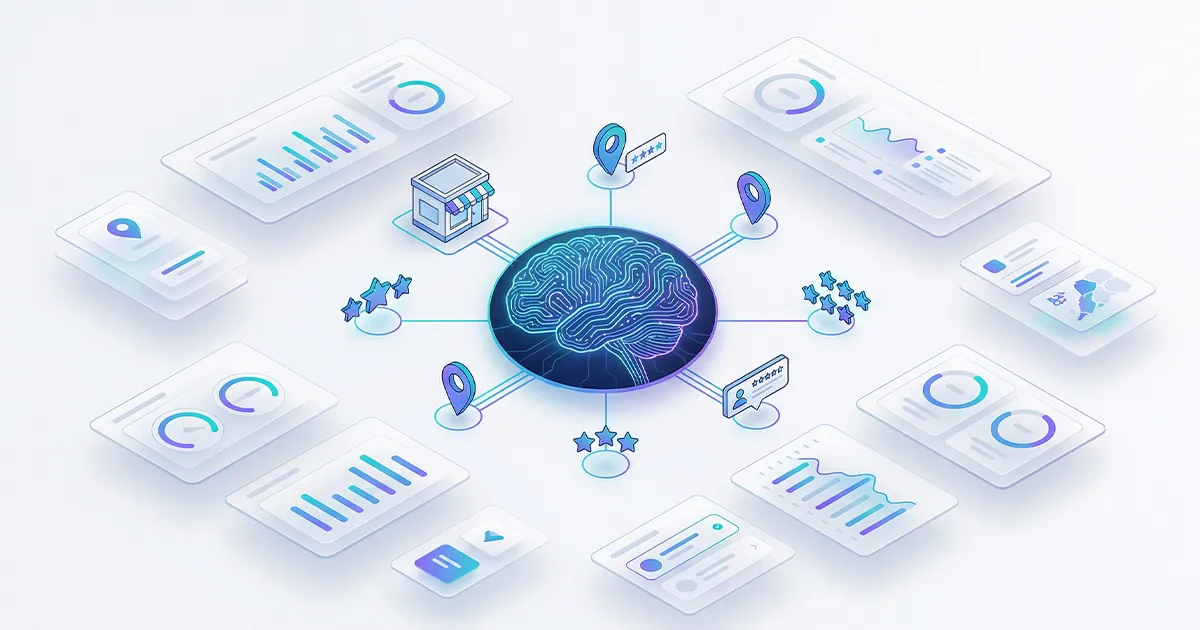
AI doesn’t rank pages. It evaluates businesses as entities built from multiple connected data sources.
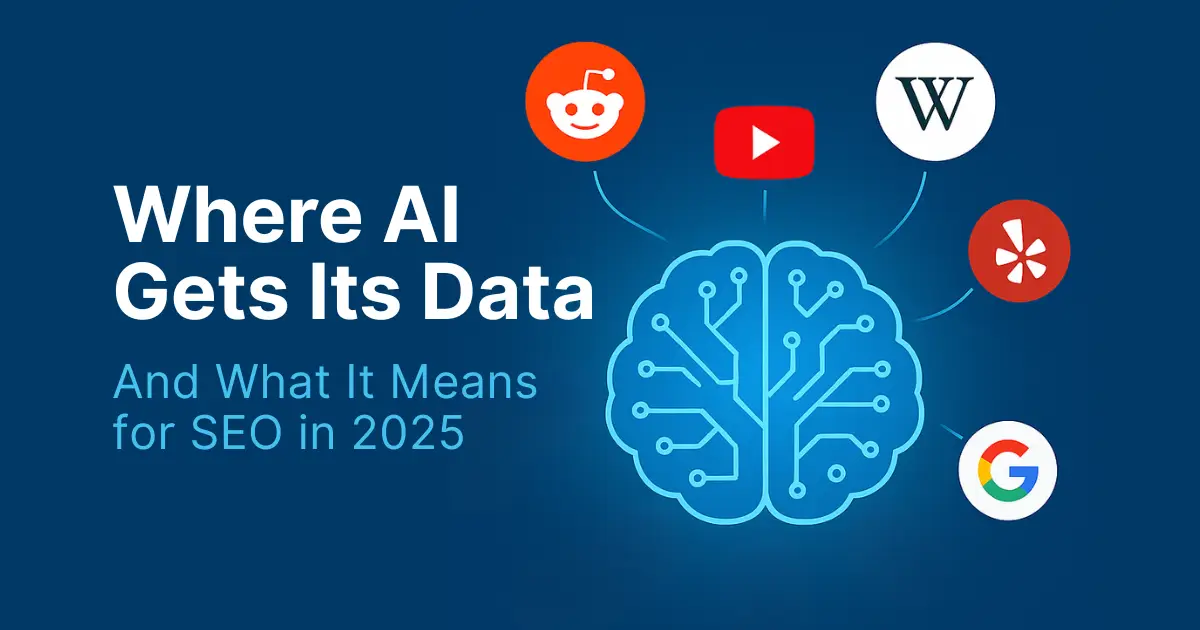
AI merges signals from across the web into one unified understanding of your business, including:
- Google Business Profile data
- Website content and structured data
- Reviews and ratings
- Third-party directories and citations
- Brand mentions and context
Google explicitly confirms it uses information from multiple sources to understand local businesses
https://support.google.com/business/answer/7091.
- If signals align, confidence increases.
- If signals conflict, confidence drops and recommendations disappear.
The AI Local Visibility Stack (2026 Model)
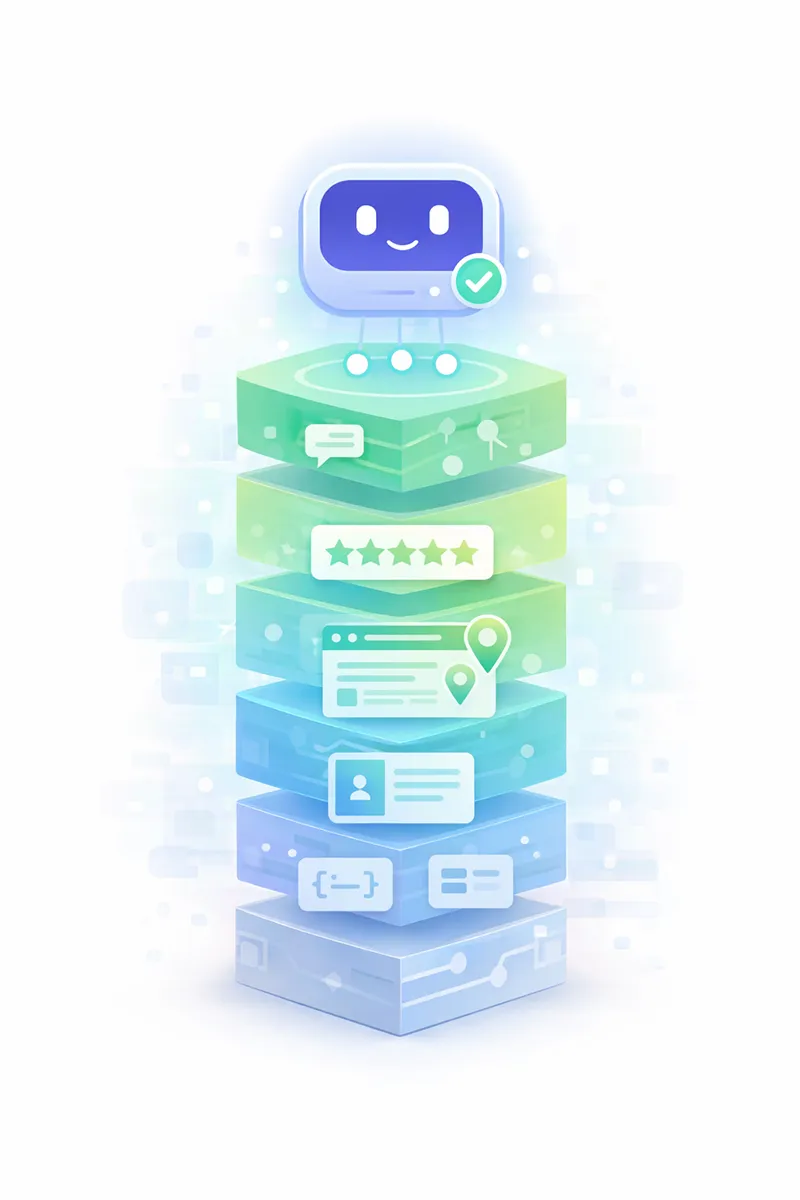
AI visibility is built in layers not won with a single ranking.
AI-driven discovery relies on layered confidence, not a single signal.
The Core Layers AI Evaluates
-
Structured & Machine-Readable Data
https://schema.org/LocalBusiness -
Website Clarity
https://developers.google.com/search/docs/fundamentals/creating-helpful-content -
Listings Consistency
https://www.brightlocal.com/learn/local-citations/ -
Reviews & Reputation
https://www.brightlocal.com/research/local-consumer-review-survey/ -
Brand Mentions & Context
https://patents.google.com/patent/US20150012396A1 -
AI Confidence
If any layer weakens, AI hesitation increases and recommendations disappear.
Why Rankings Alone Will Stop Working
Traditional local SEO focuses on position.
AI focuses on certainty.
Google has already stated that ranking alone does not guarantee visibility across all search experiences
https://developers.google.com/search/blog/2023/02/google-search-and-ai-content.
In AI-driven experiences:
- Being #3 can still mean being invisible
- AI may recommend only one business
- Users may never see a map at all
This is why many businesses will see:
- No ranking drops
- No traffic warnings
- Yet fewer calls and leads
AI Local SEO shifts the goal from ranking everywhere to being chosen.
Maps Visibility vs AI Visibility
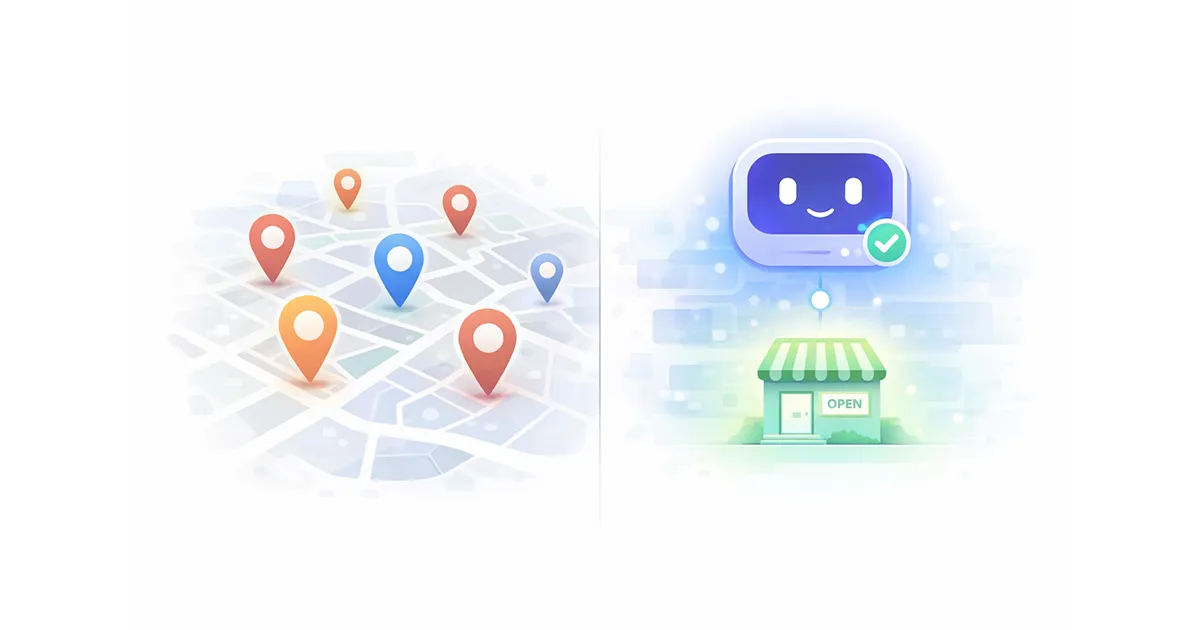
Maps reward proximity. AI rewards trust.
Maps Visibility
- Proximity-based
- Competitive
- Interface-driven
- Still critical for navigation searches
AI Visibility
- Trust-based
- Context-driven
- Assistant-led
- Often invisible until it’s missing
Ranking well on Maps does not guarantee AI recommendations
https://support.google.com/business/answer/7091.
The Biggest Risks for Local Businesses
AI Local SEO introduces risks traditional SEO never faced:
- Incorrect business information being recommended
- Competitors being suggested instead
- Outdated services or hours surfacing
- Traffic declines without ranking changes
- No clear explanation for lost leads
McKinsey highlights that AI-driven decision systems prioritize data reliability over discoverability
https://www.mckinsey.com/capabilities/mckinsey-digital/our-insights/the-state-of-ai.
If AI doesn’t trust your data, it doesn’t ask questions. It moves on.
What Happens When Business Data Conflicts
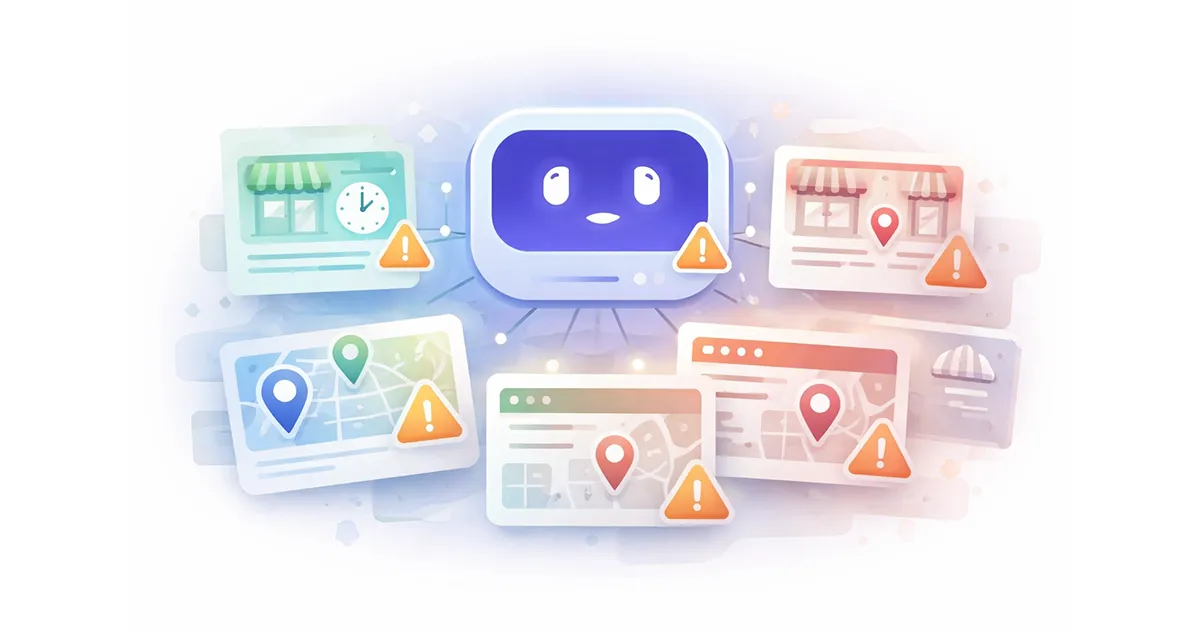
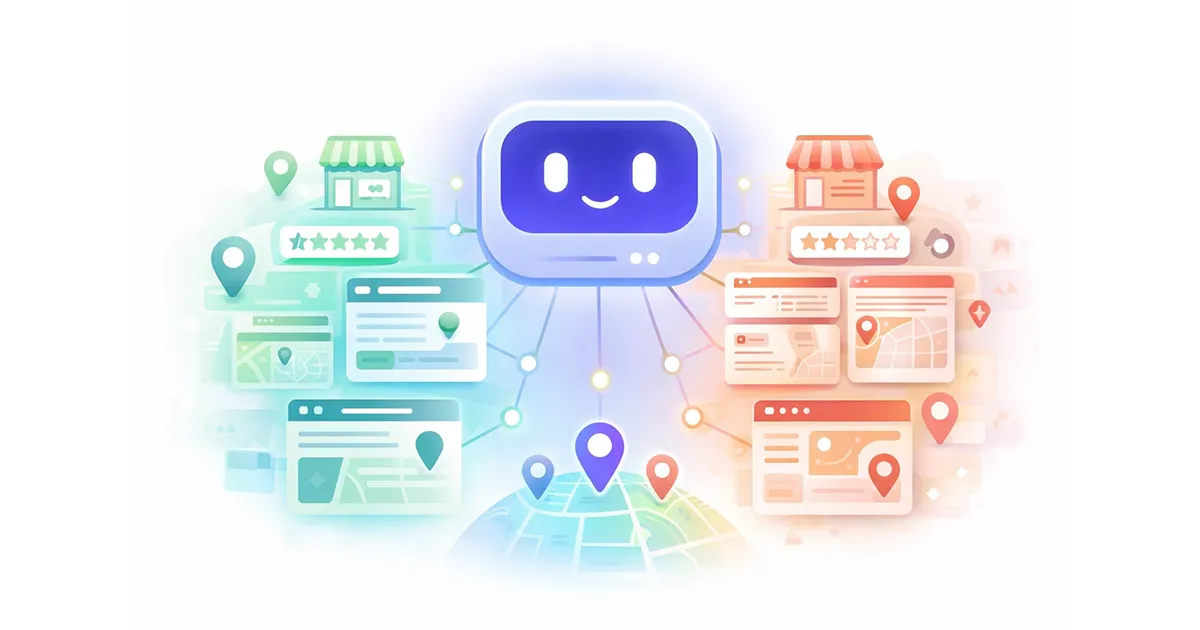
Conflicting signals create AI hesitation not clarification.
Google confirms inconsistent information can reduce visibility and trust
https://support.google.com/business/answer/3038177.
AI doesn’t resolve conflicts like humans do. It reduces confidence and avoids recommendation altogether.
How to Prepare for AI Local SEO Before 2026
1) Treat Your Business as an Entity (Not Just a Website)
https://developers.google.com/search/docs/appearance/structured-data/intro-structured-data
2) Eliminate Data Conflicts Everywhere
https://www.brightlocal.com/learn/local-citations/building-citations/
3) Optimize for Clarity (Not Keywords)
https://developers.google.com/search/docs/fundamentals/creating-helpful-content
4) Strengthen Real-World Trust Signals
https://www.brightlocal.com/research/local-consumer-review-survey/
5) Monitor AI Visibility (Not Just Rankings)
AI-assisted discovery is increasingly a zero-interface experience, meaning visibility must be inferred, not observed
https://blog.google/products/search/generative-ai-search/.
Preparing for AI Local SEO
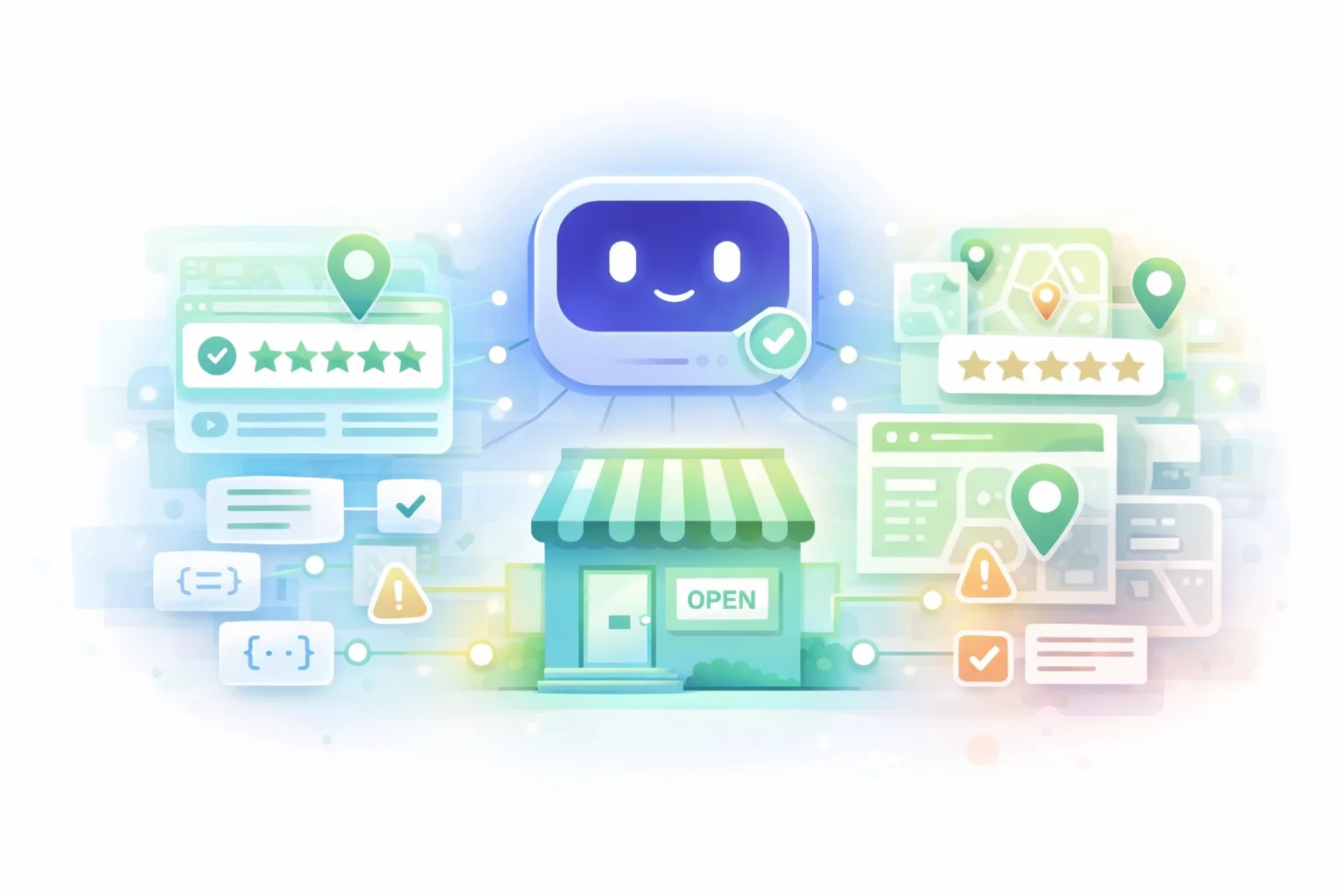
Prepared businesses don’t chase rankings. They earn recommendations.
Businesses that align their data, reputation, and clarity become easy choices for AI systems.
If you want a concrete example of how to evaluate those signals in one place, our Demo AI Visibility Audit shows what a client-ready AI visibility report can look like.
The Future of Local SEO Is Visibility Management
By 2026:
- SEO becomes visibility engineering
- Rankings become signals, not outcomes
- Reports become decision tools
- AI visibility becomes a measurable channel
The goal is no longer to rank everywhere.
It’s to be trusted enough to be chosen.
About Rankley
Rankley helps local businesses and agencies understand, monitor, and improve visibility across traditional search, Maps, and AI-driven discovery combining automated audits, real-world data, and AI-powered insights.
Related Reading on AI & Local SEO

Published by Rankley Editorial
The Rankley team shares practical guides, tools, and insights to help local businesses get found online.