On this page
- Where AI Gets Its Data (and Why It Matters for AI SEO)
- What This Data Means for AI SEO
- How AI SEO Impacts Local Businesses
- Your 2025 AI SEO Action Plan
- 1) Build a Consistent Brand Footprint
- 2) Join and Contribute to Real Conversations
- 3) Leverage User-Generated Content
- 4) Optimize Multimedia for AI
- 5) Use Structured Data for Clarity
- Conclusion: The Future of SEO Is AI SEO
- Related Reading on AI SEO and Local Visibility
AI SEO is changing everything about how people find businesses online. Search isn’t dying. It’s evolving. Your customers aren’t just Googling anymore; they’re asking AI. And what’s even more important? The answers AI tools like ChatGPT, Perplexity, and Gemini provide aren’t random. They’re based on data from specific websites across the web.
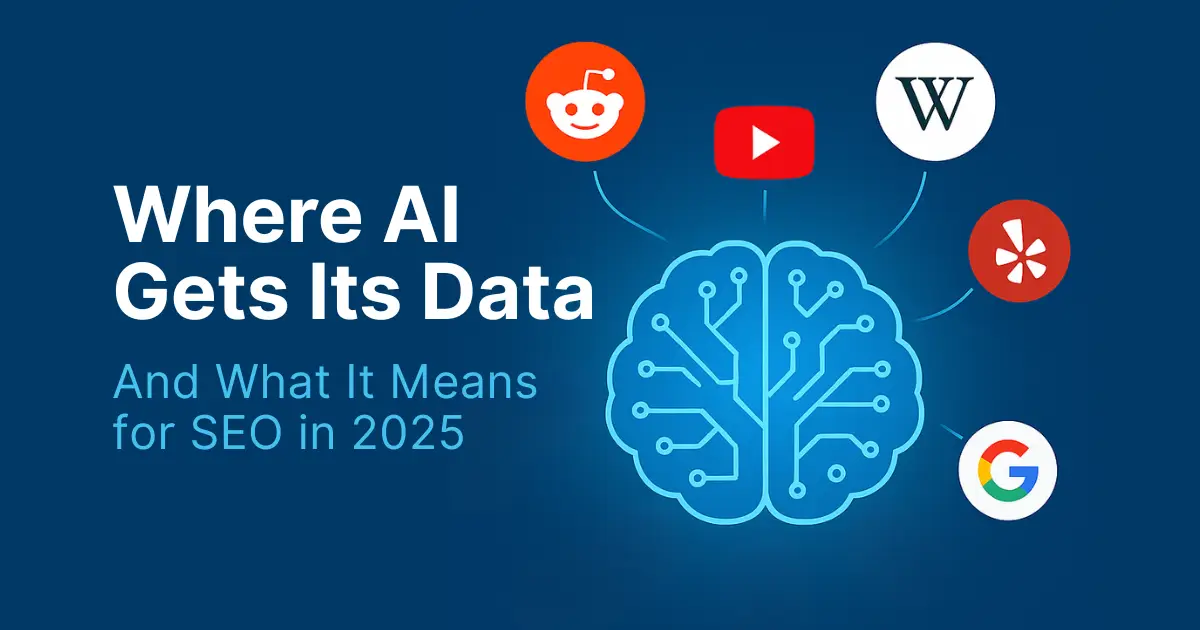
A Semrush analysis of 150,000 citations (June 2025) reveals where large language models (LLMs) actually get their information. The results should make every business rethink how they approach AI SEO strategy for visibility in both Google and AI-driven search.
Where AI Gets Its Data (and Why It Matters for AI SEO)
According to the Semrush study, the top sources cited across AI systems like ChatGPT, Perplexity, and AI Overviews include:
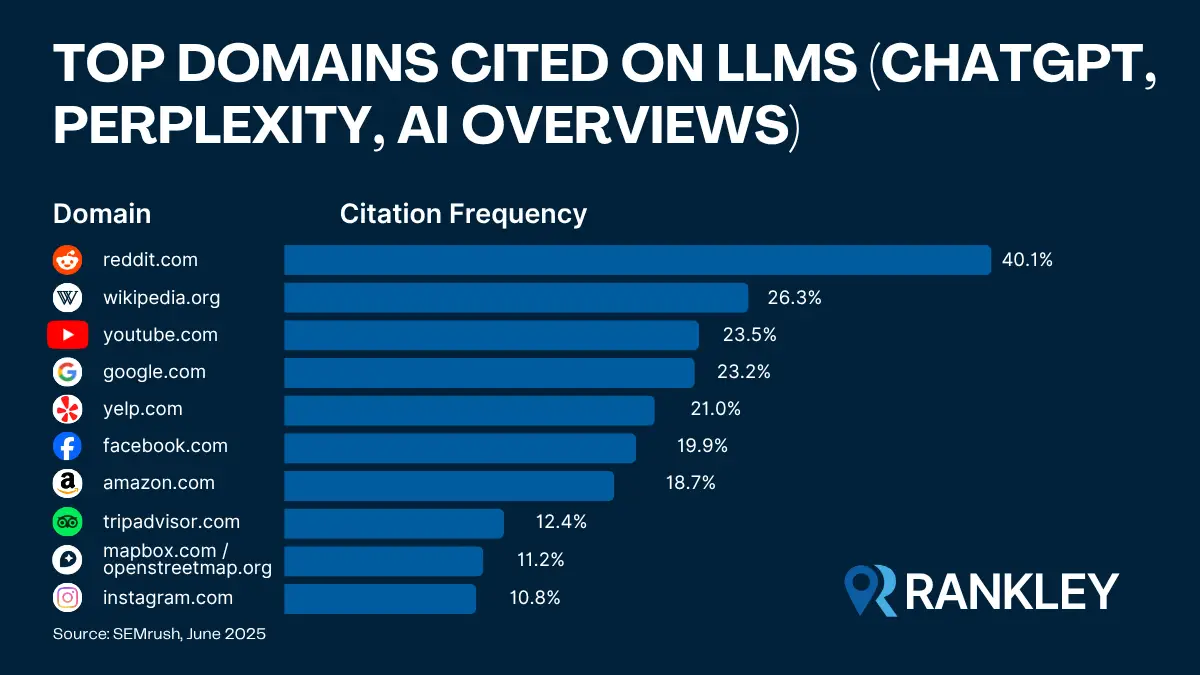
Top domains cited by AI models according to a Semrush study (June 2025).
| Domain | Citation Frequency |
|---|---|
| Reddit.com | 40.11% |
| Wikipedia.org | 26.33% |
| YouTube.com | 23.52% |
| Google.com | 23.28% |
| Yelp.com | 21.01% |
| Facebook.com | 19.96% |
| Amazon.com | 18.72% |
| Tripadvisor.com | 12.46% |
| Mapbox.com / OpenStreetMap.org | 11.29% |
| Instagram.com | 10.89% |
Source: Semrush AI Mode Comparison Study (June 2025).
What This Data Means for AI SEO
At first glance, this list looks like a mix of social, content, and mapping platforms. But dig deeper and it reveals a major shift:
AI isn’t just scraping web pages. It’s learning from human conversations, reviews, and behavior.
That’s where the future of AI SEO optimization begins.
- Reddit (40.1%) – Community discussions drive AI context. Real people debating products and services.
- Wikipedia (26.3%) – Structured, factual data still builds authority.
- YouTube (23.5%) – Transcripts and descriptions provide valuable natural language context.
- Yelp, Tripadvisor, Amazon – Reviews and ratings help AI gauge reputation and trust signals.
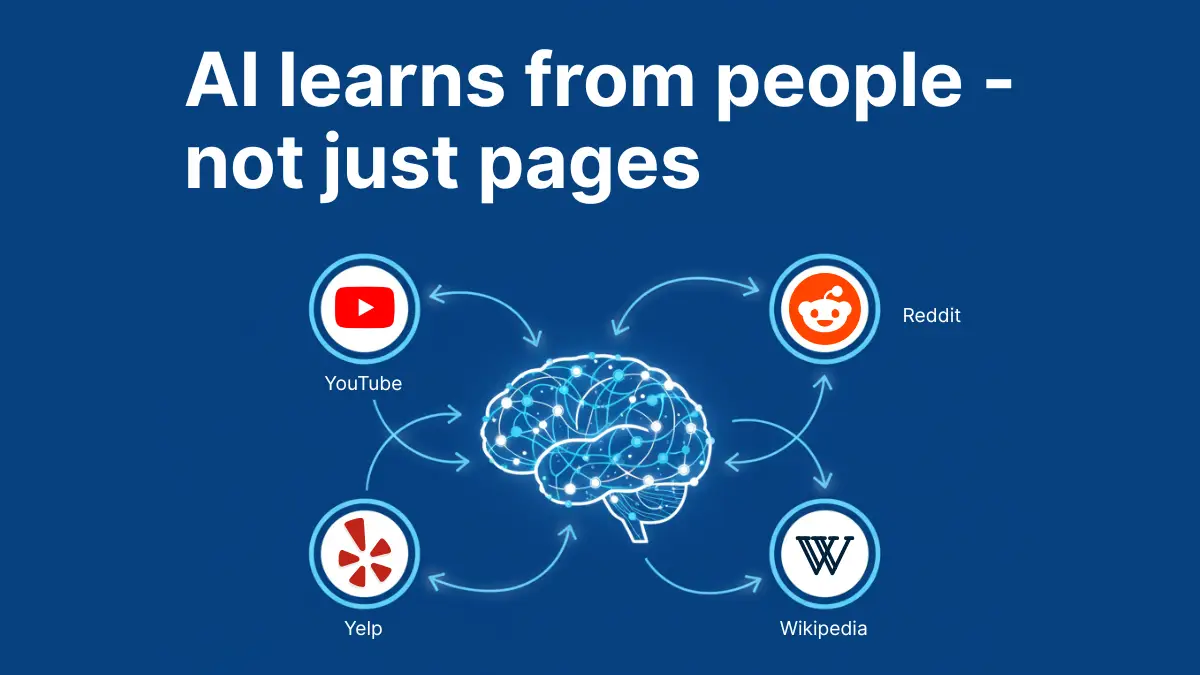
AI relies heavily on user-generated and contextual data not just traditional website content.
In short, AI SEO depends on real experiences and community-driven data. For marketers, this expands search optimization beyond Google and into the broader ecosystem of digital reputation and content signals.
How AI SEO Impacts Local Businesses
This doesn’t kill SEO it evolves it. The old playbook was simple: optimize for Google. The new playbook is to optimize for Google and AI.
For local businesses, this shift means visibility depends on your presence across multiple data ecosystems. When someone asks an AI assistant, “What’s the best coffee shop near me?”, it’s pulling data from:
- Your Google Business Profile
- Yelp and Facebook reviews
- Mentions on Reddit and community forums
- Your website’s structured data and local citations
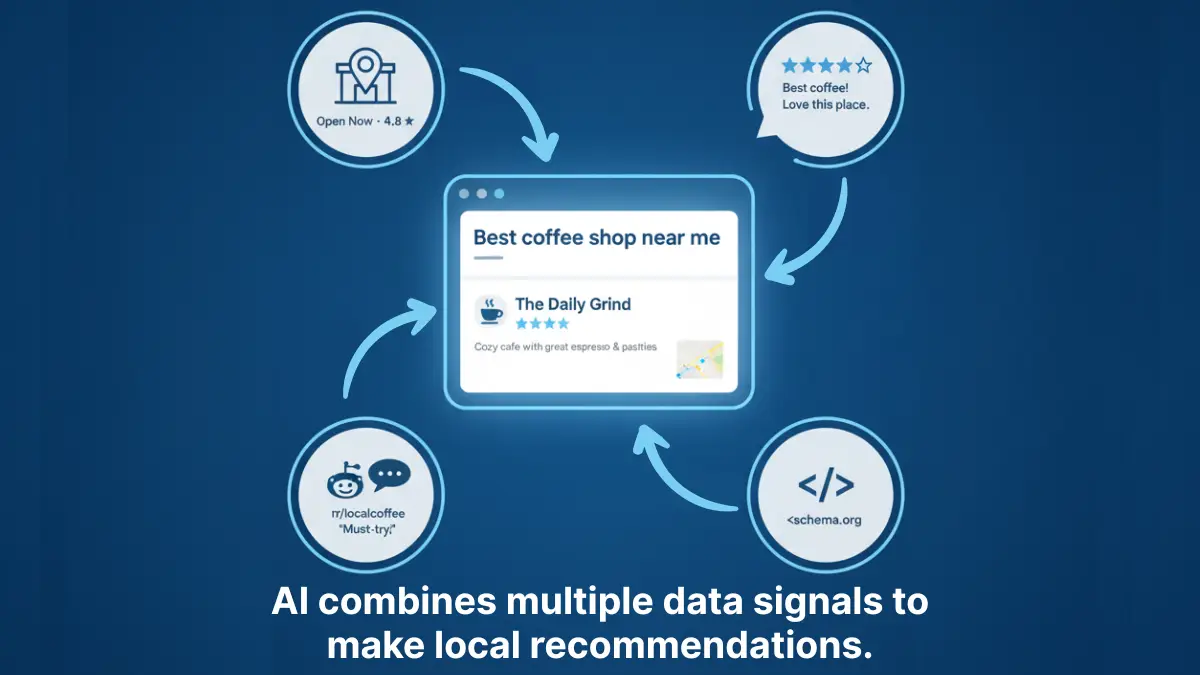
AI recommendations are powered by aggregated reviews, profiles, and structured local SEO data.
If your business data or reviews are inconsistent, AI can’t confidently recommend you even if your website ranks well. That’s why AI SEO and local SEO now go hand-in-hand.
If you want to see how those trust signals can be scored in a real deliverable, review our Demo AI Visibility Audit.
Your 2025 AI SEO Action Plan
1) Build a Consistent Brand Footprint
Ensure your business name, address, and phone number (NAP) match exactly across Google, Yelp, Facebook, Apple Maps, and Bing Places. AI models prioritize structured, consistent data.
2) Join and Contribute to Real Conversations
Participate authentically on Reddit, Quora, and LinkedIn. Answer questions, share insights, and demonstrate authority. AI learns from trusted human dialogue a cornerstone of modern AI SEO.
3) Leverage User-Generated Content
Encourage customers to leave detailed reviews across multiple platforms. These signals directly feed into AI-driven reputation and visibility metrics.
4) Optimize Multimedia for AI
Include transcripts and detailed descriptions on your videos, podcasts, and shorts. These enhance your AI SEO ranking by helping models interpret your content contextually.
5) Use Structured Data for Clarity
Schema markup and metadata guide AI crawlers. Validate your implementation using Google’s Structured Data guidelines and keep it aligned with what’s visible on-page.
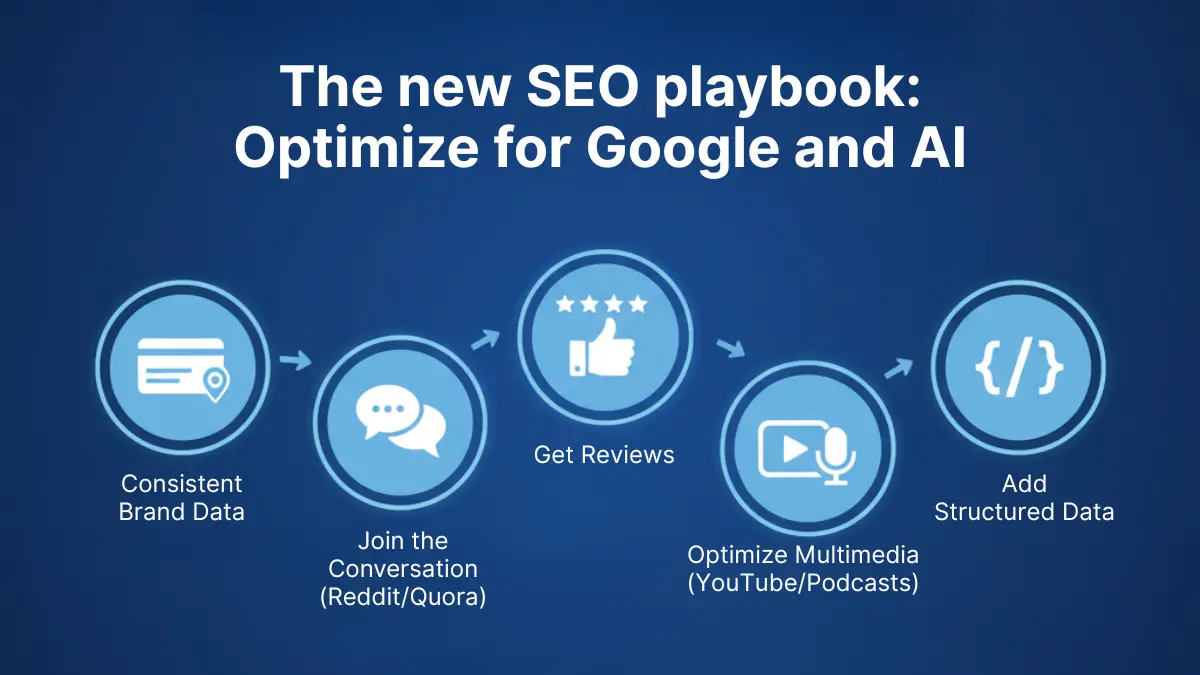
Optimizing for both search and AI visibility future-proofs your SEO strategy.
Conclusion: The Future of SEO Is AI SEO
The companies winning in 2025 understand this truth:
Being found isn’t enough. Being recommended is what matters.
As AI-driven search continues to evolve, your visibility depends on how well you show up in the places AI learns from not just Google. That’s the foundation of AI SEO success.
Rankley helps businesses bridge that gap. From auditing citations and reviews to improving structured data and local SEO, we help you appear where both customers and AI are looking.
You can also walk through our Demo AI Visibility Audit to see how AI visibility findings can be packaged into a shareable report.
See how visible your business is to AI-driven search and recommendations.
Run a Free Local AI SEO Audit: https://www.rankley.com/pricing
Learn more about Rankley: https://www.rankley.com/
Related Reading on AI SEO and Local Visibility

Published by Rankley Editorial
The Rankley team shares practical guides, tools, and insights to help local businesses get found online.