
Wondering how AI is changing search? Generative answers and AI Overviews now resolve more queries directly on the results page, compressing the click journey and raising the bar for content quality. This guide explains what’s changing, the risks and opportunities for organic traffic, and the exact playbook your business can use to stay visible as how AI is changing search accelerates in 2025.
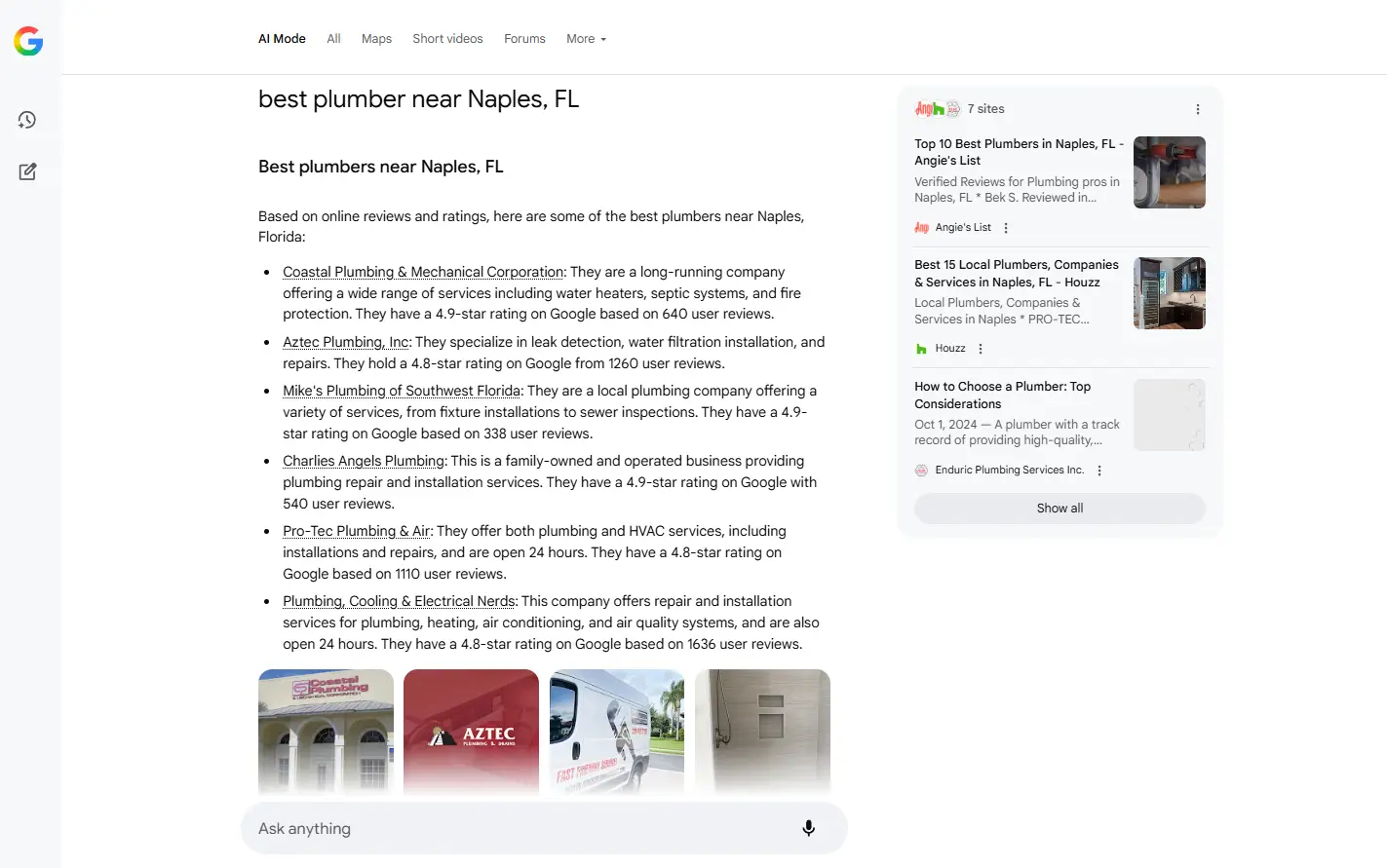
AI-generated answers increasingly appear above or alongside traditional organic results, a clear example of how AI is changing search.
How AI Is Changing Search: The Short Version
For many queries, search engines now present a synthesized, AI-written answer at the top of the page. These responses cite sources, pull facts, and summarize steps so users don’t need to open multiple tabs. In other words, the SERP itself is doing the reading.
Winning organic visibility in this environment means becoming the page AI prefers to read and reference not just the page a human might eventually click. If you’re new to how AI sources information, see our explainer on where AI gets its data for SEO and why that matters for how AI is changing search.
From Classic SEO to AI-Aided Results
Classic SEO prioritized keyword targeting, backlinks, and on-page best practices to compete for blue links. As engines adopted large language models, they began using answer units: featured snippets, knowledge cards, and now generative overviews to resolve intent faster.
Practically, this means your content must be unambiguous, well-structured, and demonstrably expert so it can be excerpted cleanly into AI responses. Read more in
Google’s structured data documentation
and
Core Web Vitals guidance
; both are pivotal to succeeding as how AI is changing search reshapes SERPs.
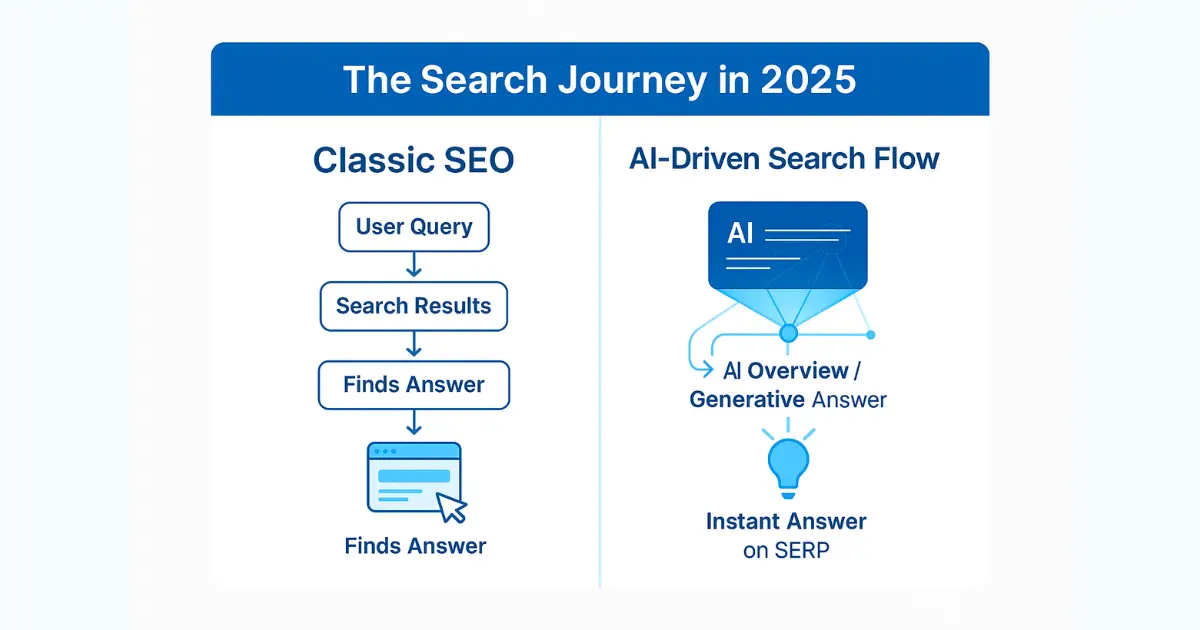
The Search Journey in 2025: classic SEO required multiple clicks, while AI-driven results answer directly on the SERP. This is how AI is changing search.
How AI Changes User Behavior
Answer-first scanning: Users expect the top of the SERP to summarize the “right” answer. They scroll only if nuance is needed.
Lower click propensity: If a quick summary satisfies intent, the click never happens.
Higher intent on remaining clicks: When users do click, it’s often for depth, proof, or action (tools, calculators, booking).
Less tolerance for fluff: Pages that are slow or repetitive are abandoned quickly see our guide to
mobile-first UX
.
Bottom line: optimize for being referenced by AI and chosen by users who still need depth as how AI is changing search evolves.
Business Impacts of AI-Driven Search
1) Reduced Click-Through Rates (CTR)
AI answers siphon clicks that once went to top listings. Informational content without unique value will feel the drop first. Expect fewer sessions but a higher conversion propensity on the sessions you keep.
2) Higher Bar for Authority & Structure
AI leans on sources that are cleanly structured, factually consistent, and visibly credible (author bios, references, real-world evidence). See
Google’s Helpful Content guidelines
for more.
3) Content Redundancy Gets Filtered Out
Topics that can be summarized in a paragraph are table stakes. What stands out are opinionated perspectives, original data, screenshots, and concrete steps. See how we approach this in our
Local SEO 2025 guide
.
The 2025 Playbook to Win When AI Is Changing Search
Here’s a pragmatic, repeatable approach for teams of any size that aligns with how AI is changing search.
Answer the Question First Then Go Deep
- Open sections with a 2–4 sentence direct answer to the core query.
- Follow with detail: steps, caveats, examples, visuals.
- Use descriptive H2/H3s so your answer blocks are easy to extract.
Demonstrate E-E-A-T on Every Key Page
- Include author bylines and credentials.
- Add first-hand proof: screenshots, mini case studies, or data notes.
- Keep timestamps current with an “Updated” note and changelog bullets.
Use Structure AI Can Parse
Mark up pages with Article, FAQPage, HowTo, Product where relevant (
schema.org
).
- Prefer lists, tables, and concise steps.
- Add a Key Takeaway at the end of each section.
Create Assets That AI Won’t Replace
- Original research, benchmarks, calculators, templates.
Opinionated POVs and case narratives with real outcomes like our post on
Local SEO Myths 2025
.
- Short videos or diagrams that clarify complex steps.
Match Format to Intent
- How-to intent → numbered steps + visuals.
- Comparison intent → tables with pros/cons and “best for.”
- Decision intent → CTAs near top, pricing, timelines.
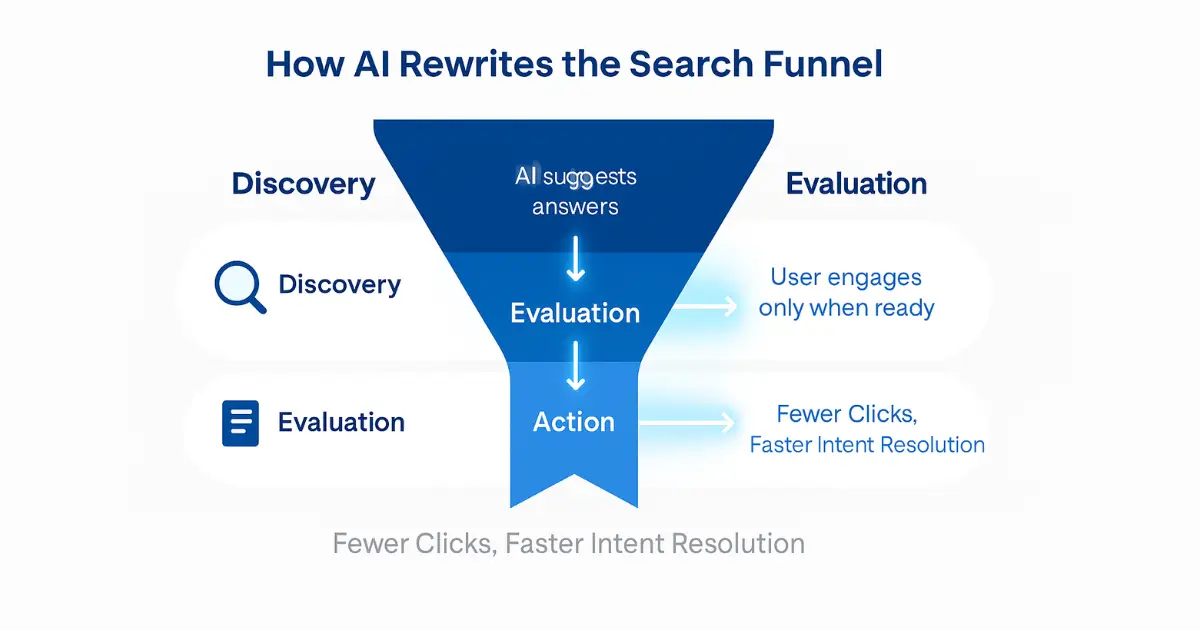
How AI rewrites the search funnel: a visual of how AI is changing search from discovery to decision.
Content Frameworks That Feed AI Answers
Use these blocks to earn excerpts, citations, and clicks as how AI is changing search prioritizes clarity:
- Definition block: short definition, “Why it matters,” one example.
- Step block: numbered list (5–8 steps) with outcomes.
- Pros/cons block: balanced list + “When to choose.”
- Comparison table: features, limits, cost, best-for.
- FAQ block: 4–6 concise Q&As using natural phrasing.
If a section can’t be summarized in 3–4 lines, refactor it. Summaries are what AI lifts; depth is why users stay.
Technical & Data Signals AI Relies On
Structured data: validate schema via
Search Central
.
- Performance: target Core Web Vitals (LCP ≤ 2.5s, CLS < 0.1).
- Credible linking: cite primary sources; interlink related Rankley resources.
- Freshness: update evergreen pages; avoid duplicate intent.
What to Measure Beyond CTR
As how AI is changing search reduces raw clicks, expand your scorecard:
- Impressions & topic visibility (via Search Console).
- Assisted conversions in multi-touch journeys.
- Engagement depth: scroll, dwell time, interactions.
- Branded search growth and direct traffic trends.
- AI coverage: track when your pages are cited or excerpted.
What’s Next & How to Prepare
- Richer AI tasks: comparisons, planning, interactive summaries.
- Trust weighting: authorship, verifiable sources, safety layers.
- Experience signals: screenshots, outcomes, first-hand examples.
Fewer, stronger pages: consolidate duplicate coverage. See
Local SEO Myths (2025)
.
Future-proof by investing in content that’s hard to synthesize: proprietary data, frameworks, and measurable results the winning approach as how AI is changing search continues.
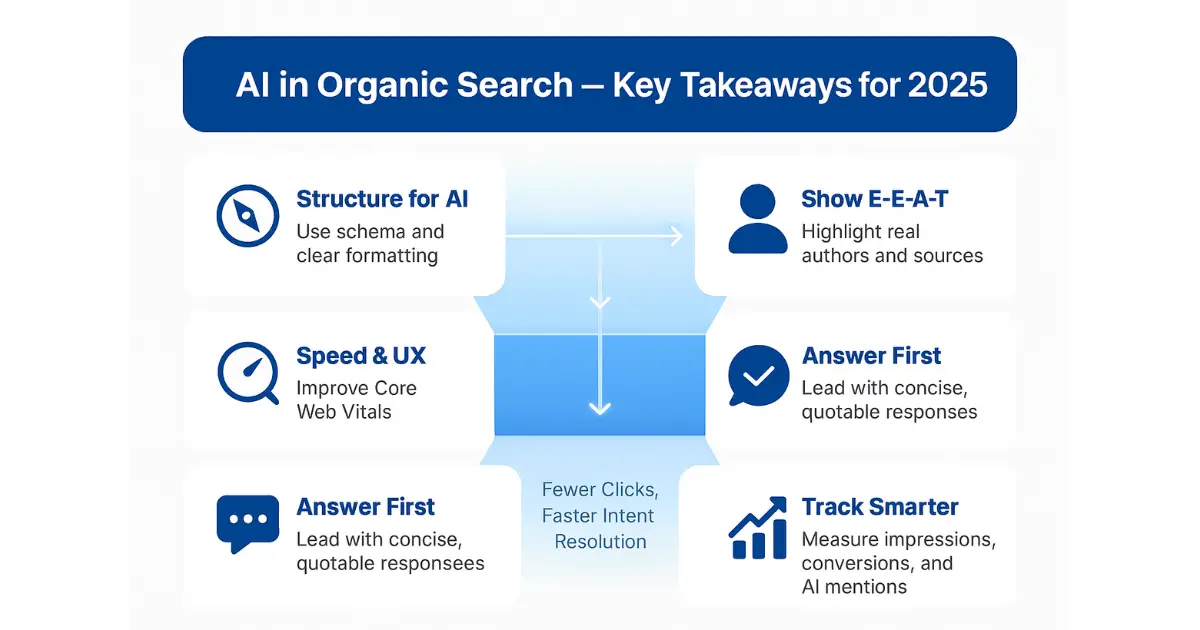
AI in Organic Search key takeaways to execute now as how AI is changing search reshapes visibility.
Conclusion & Action Checklist
The shift in how AI is changing search is clear: engines answer more and ask users to click less. Brands that make their pages easy for AI to read and valuable for humans who still need depth will maintain visibility and conversions.
- Start each section with a concise, quotable answer.
- Show E-E-A-T: bylines, sources, screenshots, results.
- Use schema, lists, and FAQs for clear structure.
- Create assets AI can’t replicate: data, tools, templates.
- Link users to next actions: demos, calculators, and pricing.
- Measure beyond CTR: impressions, conversions, AI mentions.
Want help implementing this? Explore our guides on AI SEO and
Local SEO in 2025
for step-by-step templates you can use today.
